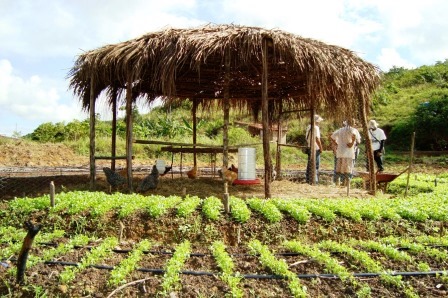
Economic activities traditionally associated with the Brazilian Legal Amazon, such as extensive cattle ranching, mining, and the extraction of native species, have historically been characterized by: (i) rapid expansion of logistics infrastructure; (ii) extensive land use; and (iii) unsustainable exploitation of natural resources.
This development model undervalues standing forests and often views local populations as obstacles to economic growth, overlooking opportunities to integrate local activities into the modern economy without converting forests to other land uses. The promotion of this model attracts predatory and often illegal activities that exploit natural and social resources, resulting in deforestation, ecosystem disruption, and the displacement of Indigenous Peoples and traditional communities.
Addressing deforestation and environmental degradation in the Amazon therefore requires the adoption of a development model capable of promoting structural transformations in the region while ensuring the participation of and benefits for local populations. Transforming emerging bioeconomy sectors into drivers of sustainable growth depends on stimulating applied scientific research and technological innovation tailored to local needs, while fostering stronger connections with the traditional knowledge systems of communities that have coexisted harmoniously with the biome for thousands of years and possess valuable expertise adapted to the region’s environmental and social realities.
To foster a transition toward a new economic model for the Amazon, it is essential to integrate Science, Technology and Innovation (ST&I) into the region’s most sustainable economic activities, particularly sociobioeconomy value chains, which offer viable alternatives to the prevailing resource-extraction-based development model. From a socioeconomic perspective, scientific and technological advances in the bioeconomy are crucial to meeting the needs of family farming, extractivism, and other activities carried out by traditional peoples and communities and small-scale farmers, especially with regard to expanding the availability of machinery, equipment, and technological solutions adapted to their production systems.
Supporting the innovation ecosystem associated with Amazonian sociobiodiversity value chains is therefore of paramount importance. Equally important is ensuring that such support includes capacity building and institutional strengthening for productive organizations and local communities, enabling their participation in extended value chains while respecting their ways of life and ensuring the fair and equitable sharing of benefits generated by the bioeconomy.
THE PROJECT
The Science, Technology and Innovation (ST&I) focus of the project is directed toward sociobiodiversity value chains and prioritizes initiatives that: (i) operate at a broader territorial scale, with larger resource volumes and longer implementation periods, supporting structural transformation; (ii) integrate applied research with concrete local demands through a mission-oriented ST&I approach, promoting collaboration between scientific and traditional knowledge systems, as well as among the various actors in the regional innovation and sustainable production ecosystem; (iii) establish mechanisms for training and retaining qualified professionals within the region; and (iv) strengthen non-profit Science and Technology Institutions (STIs) and collective socioproductive organizations.
The project supports the Amazon Challenges Program (Programa Desafios da Amazônia), an initiative under Amazônia+10 aimed at strengthening the innovation ecosystem of the Amazon region. The program focuses on: (i) supporting Research, Development and Innovation (RD&I) projects that address challenges related to Amazonian sociobioeconomy value chains and are developed through collaborative networks involving Science and Technology Institutions (STIs) and Socioproductive Organizations (SPOs) in the Brazilian Legal Amazon, through public calls for proposals; and (ii) supporting activities that strengthen key actors in the innovation ecosystem, including STIs, SPOs, Technology Innovation Centers (NITs), and State Research Support Foundations (FAPs), while promoting the dissemination of traditional, scientific, and technological knowledge throughout Brazil.
Accordingly, the project is structured into four components:
Deliverables
Component 1 – Support for RD&I Projects
- Funding for Research, Development and Innovation (RD&I) projects through public calls for proposals;
- Promotion of collaborative initiatives between science and technology institutions and socioproductive organizations;
- Support for projects focused on addressing bottlenecks in Amazonian sociobioeconomy value chains.
Component 2 – Institutional Strengthening
- Institutional strengthening of State Research Support Foundations (FAPs) in the Brazilian Legal Amazon through training activities;
- Institutional strengthening of Science and Technology Institutions (STIs) through capacity-building initiatives;
- Institutional strengthening of Socioproductive Organizations (SPOs) through training and organizational development activities.
Component 3 – Knowledge Systematization
- Knowledge management and technology dissemination activities;
- Systematization of lessons learned and innovative solutions to facilitate replication and scaling;
- Dissemination of scientific, technological, and traditional knowledge.
Component 4 – Project Management
- Administrative and financial management and accountability;
- Interinstitutional coordination and communication activities;
- Monitoring and evaluation of project results and impacts.
Expected Results
-
Overcoming bottlenecks in Amazonian sociobioeconomy value chains through scalable solutions adapted to local realities, resulting in improved productivity, greater value addition, enhanced occupational safety, improved quality of life, and sustainable use of biodiversity.
-
Strengthening and greater integration of the regional research and innovation system, expanding the capacity of local actors to operate through cooperation networks, integrate scientific and traditional knowledge, mobilize financial resources, and manage projects.
-
Training and retention of qualified professionals in the Brazilian Legal Amazon, including young people living in rural areas.
INTERVENTION LOGIC
The project falls within the “science, innovation and economic instruments” (4) component of the Amazon Fund’s Logical Framework, contributing to the following direct outcomes: 4.1 Knowledge and technologies aimed at biodiversity conservation and sustainable use, deforestation monitoring and control, and land-use planning generated, disseminated, and applied; and 4.2 Economic instruments aimed at biodiversity conservation and sustainable use, deforestation monitoring and control, and land-use planning developed, disseminated, and applied.