CONTEXTUALIZATION
By 2016, deforestation had already consumed 19% of the Amazon biome (Prodes/Inpe). Among the nine states of the Legal Amazon, Pará is the one that has contributed the most to accumulated deforestation in the region. Therefore, promoting environmental regularization in Pará is essential to achieving national restoration commitments, which aim to restore at least 12 million hectares in Brazil by 2030.
However, in studies conducted on forest restoration, Imazon found that advancing restoration efforts required overcoming several barriers, such as: (i) rural producers’ perception that restoration is an expensive, complex, and bureaucratic process; (ii) lack of adequate technical assistance; (iii) insufficient technical capacity to implement forest restoration processes; (iv) limited access to financing for restoration; and (v) lack of leadership and governance on forest restoration in the Amazon.
Pará brings together a solid information base and a network of partners for forest restoration. However, what was missing was the connection among these components to make forest restoration a reality. Within the project, forest restoration actions were implemented to help overcome these barriers and to scale up environmental regularization efforts.
The project’s direct area of operation (eastern Pará) is part of the Amazon’s deforestation arc. The municipalities of Paragominas, Ulianópolis, and Dom Eliseu were once included on the MMA’s list of municipalities with critical deforestation and managed to be removed from it by controlling deforestation and advancing CAR registration. By engaging different local actors (public sector, family farmers, and companies) through a territorial approach, the project enabled the understanding of local particularities, the contextualization of external models, and the consideration of local dynamics.
THE PROJECT
The project’s central objective was to support the advancement of environmental compliance of rural properties in the Legal Amazon. To achieve this goal, rural properties were selected to receive restoration support from the project, with the aim of demonstrating the implementation of restoration models suited to the characteristics of rural properties, their users, and the Amazonian landscape, so that successful experiences could be disseminated and scaled up. Strategies were also developed for the training of agents, for monitoring, and for fostering forest restoration.
The four technical components, in addition to the management component, are described below:
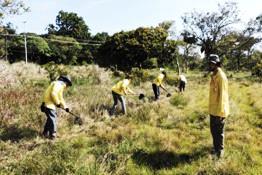
Component 1 – Forest restoration in eastern Pará: implementation of forest restoration projects through the following activities: defining the area to be restored; conducting diagnostics and establishing baseline conditions; preparing technical protocols for forest restoration; supporting the implementation of restoration in small rural properties, including the provision of seedlings and inputs; and documentation and dissemination.
Component 2 – Forest Restoration Training Program: development and implementation of a forest restoration training program aimed at preparing 100 multiplier agents, creating a critical technical mass capable of scaling up restoration efforts in Pará and the surrounding region.
Component 3 – Monitoring of forest restoration: development, in partnership with environmental agencies and technical assistance organizations, of a monitoring workflow for areas under restoration, combining remote sensing technologies with field inspections. To develop this workflow, the following activities were carried out: mapping areas undergoing natural regeneration; creating a geospatial database; organizing workshops and training courses; and designing a strategy for continuous monitoring.
Component 4 – Strategy for fostering forest restoration: identification of key opportunities to promote forest restoration, including cost–benefit analyses, assessments of new financial arrangements, and technical assistance mechanisms capable of making restoration more attractive. As the final output of this component, a restoration promotion guide was developed, taking into account the main contexts observed in Component 1.
INTERVENTION LOGIC
The project was aligned with the “Sustainable Production” (Component 1) and “Science, Innovation, and Economic Instruments” (Component 4) of the Amazon Fund’s Logical Framework.
Its direct effects were defined as follows: (i) Expanded managerial and technical capacities for the implementation of restoration activities; (ii) Recovery of deforested and degraded areas for economic purposes and ecological conservation; and (iii) Knowledge and technologies aimed at the sustainable use of the Amazon biome produced, disseminated, and applied.
The project’s deliverables aligned with these direct effects generally sought to facilitate the processes of mobilizing and engaging rural property holders in the environmental and productive regularization of their areas, within a cooperation strategy involving Municipal Environmental Secretariats (Semma) and other key stakeholders. In practical terms, this facilitation occurred through technical inputs (e.g., maps, information, training, and studies on strategic topics), material inputs (e.g., seedlings, fertilizers, and tools for family farmers), and specialized operational support (e.g., labor for the implementation of agroforestry systems).
Finally, considering that the environmental and productive regularization of rural properties is a structuring action for formalizing the protection of remaining forests and/or areas under advanced regeneration, restoring deforested and/or degraded areas in Permanent Preservation Areas (APP) and/or Legal Reserves (RL), and identifying areas for alternative land use, among other property attributes, by providing the necessary inputs to scale up rural property compliance, the project contributed to the Amazon Fund’s overall objective of reducing deforestation while promoting sustainable development in the Legal Amazon.
Click on the following image to view its objectives tree, that is, how the project's outputs and linked to the expected outcomes and impact.