Versão em Português
Project

Sustainable Production in Affected Communities of the Amazon

Interstate Agricultural Development Association (ADAI)

Código do projeto: 7139328
Project official website
Total project value
R$ 32,323,825.00
Total support amount
US$ 5,600,981.62
Contracted

Presentation

Objective

Support the implementation of sustainable agroecological production projects, nurseries, and the planting of native tree seedlings, as well as provide training and technical capacity-building for families residing in socially vulnerable areas under environmental pressure in the states of Amapá, Pará, Rondônia, Mato Grosso, and Tocantins. Its goal is to contribute to food security, income generation, and enhance the ability of beneficiary families to remain in their territories.

Beneficiary

600 families from 32 municipalities in influence of large enterprises

Territorial scope

Amapá, Mato Grosso, Pará, Rondônia, and Tocantins

Description

CONTEXTUALIZATION

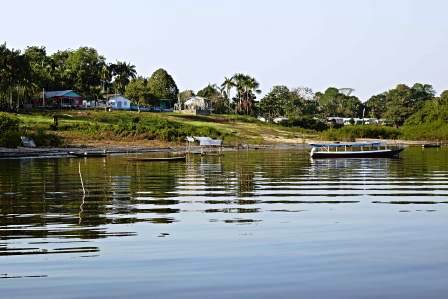
The project aims to reach Amazonian populations whose ways of life have been affected by the operation, construction, or planning of large enterprises. These enterprises have converted their areas of influence into regions of social and environmental pressure, creating a strong demand from families for support in developing sustainable development alternatives. These families include indigenous peoples, fishing communities, riverside dwellers, quilombolas, and small-scale farmers, who have historically suffered from predatory expansion in their territories, often leading to socioeconomic vulnerability, rights violations, and the need to relocate from their lands.

ADAI is a nonprofit organization founded in 1993, whose mission is to develop initiatives to support these communities in their pursuit of food and nutritional security and in addressing social inequalities. The organization has extensive experience in implementing social technology projects nationwide.

THE PROJECT

To contribute to the implementation of the Action Plan for Prevention and Control of Deforestation in the Legal Amazon (PPCDAm) and the National Policy on Agroecology and Organic Production (PNAPO), this project will scale up successful territorial protection strategies through sustainable production, which were previously implemented in a project supported by the Amazon Fund, titled Use of Social Technologies for Reducing Deforestation, from 2017 to 2021.

In the project's initial stages, 600 beneficiary families living in 32 municipalities within the area of influence of large enterprises in the states of Pará, Rondônia, Amapá, Tocantins, and Mato Grosso will be selected and mobilized through seven regional coordination hubs in Belém (PA), Marabá (PA), Altamira (PA), Itaituba (PA), Porto Velho (RO), Palmas (TO), and Sinop (MT).

The project is structured into four components.

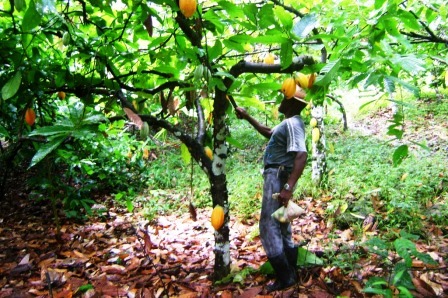
The first is sustainable agricultural production, with the implementation of 300 Integrated and Sustainable Agroecological Projects (PAIS) equipped with photovoltaic energy systems for water collection and irrigation, a recognized social technology that promotes better quality, greater diversity, and increased quantity of food consumed by beneficiary families. It also reduces production costs, facilitates garden management, and raises awareness among families about the sustainable use of natural resources. Additionally, 200 productive activity strengthening projects will be implemented, including a detailed diagnostic assessment of other economic activities needed in the regions and technical support to help 200 families develop and execute productive projects suited to their specific contexts. In this way, the project offers comprehensive and integrated technical assistance, ensuring the correct implementation of PAIS and complementary activities over three years.

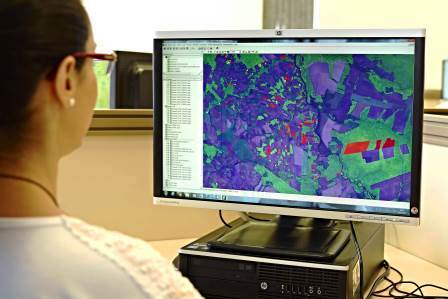
In the second component, the project will establish five nurseries for native tree seedlings, which will be developed and maintained by 100 beneficiary families. Each nursery will have an annual production capacity of 15,000 to 20,000 seedlings. Additionally, 200,000 native trees will be planted by the 600 beneficiary families, considering the characteristics of the soil, climate, and local biodiversity, covering a total of 84 hectares. Beyond continuous technical monitoring from seedling production to planting and tree management, the project will also include monitoring actions, with mapping supported by drones and an application to track progress.

The third component supports training and capacity-building, both for the technical team - so they can provide careful and appropriate support to beneficiary families through field visits and Planning, Monitoring, and Evaluation (PMA) activities - and for the beneficiary families themselves, with technical training and community leadership development. This will be done through local workshops and regional meetings to disseminate information, multiply learning, and foster dialogue between families and local technical teams, as well as seminars for experience exchange. Additionally, activities in schools are planned to raise awareness and train students in project-covered areas on topics such as environmental education, proper disposal of recyclable and non-recyclable waste, appropriate use of organic waste from schools and family properties, and how to produce healthy food in schools and on family farms.

Finally, the fourth component supports communication and sustainability actions, including the production of educational materials, dissemination of activities and results, production and distribution of printed, audiovisual, and digital materials, and the commissioning of studies to explore the future creation of a community fund to benefit this target audience.

INTERVENTION LOGIC

The project falls under the “Sustainable Production” component (1) of the Amazon Fund Logical Framework, contributing to the following direct effects: (1.1) Identification and development of sustainable forest and biodiversity-based economic activities.(1.3) Expansion of managerial and technical capacities for implementing sustainable forest and biodiversity-based economic activities. (1.4) Restoration and economic/conservation-oriented use of deforested and degraded areas through actions such as implementing agroecological production projects and nurseries, planting native tree seedlings, and providing technical training for families living in socially vulnerable areas.


 

Evolution

Date of approval 12.19.2024
Date of the contract 02.13.2025
*Disbursement period 08.13.2027
*Deadline for disbursements
approval
12.19.2024
award
02.13.2025
conclusion

Disbursement

date amount
1º disbursements 03.11.2025 R$8,893,653.71
2º disbursements 07.09.2026 R$12,429,147.20
Total amount disbursed R$21,322,800.91

Total amount disbursed in relation to the Amazon Fund’s support

66%

ACTIVITIES CONDUCTED

The project focused its efforts on structuring field teams and logistics, selecting beneficiary families, and initiating technical assistance, training, and community mobilization activities.
 
The main activities carried out are presented below, organized by the project’s components.
 
Component 1 – Sustainable Agricultural Production
 
A total of 300 families were selected for the implementation of Integrated and Sustainable Agroecological Projects (PAIS), and 200 families were selected for productive activity strengthening projects. Diagnostic assessments were also conducted with 200 PAIS families and 132 families involved in productive strengthening projects, providing the basis for the implementation of planned activities.ADAI mobilized community leaders and partner organizations to introduce the project and identify participating families and communities. The organization also provided guidance and support to families in obtaining the documentation required for project implementation. To date, 51 families have completed the necessary documentation for PAIS projects and 12 families for productive activity strengthening projects.A total of 3,840 technical visits were conducted with beneficiary families, focusing on technical assistance, diagnostic assessments, documentation regularization, and identification of productive needs. The project also strengthened its operational capacity through the acquisition and distribution of 19 vehicles, motorcycles, and boats to support field activities.
 
Component 2 – Nursery Establishment and Native Tree Planting
 
A total of 100 families were selected to participate in activities related to the establishment of native seedling nurseries. The project also initiated beneficiary assessments, advanced the development of nursery management instruments, and engaged with environmental agencies to facilitate the licensing process for project activities.Sixty technical visits were conducted to carry out assessments, provide guidance to participating families, and identify areas designated for reforestation.The project acquired two drones to support the monitoring of beneficiary areas, enabling mapping activities that will contribute to tracking project targets and evaluating the impacts of implemented actions.
 
Component 3 – Training and Capacity Building
 
The project held its first Planning, Monitoring, and Evaluation (PM&E) Meeting in Belém, Pará, bringing together 34 participants, including 21 women. The event promoted alignment among the technical team and partner organizations regarding project objectives, territorial challenges, and the administrative, financial, and operational procedures required for implementation.Community leadership meetings were conducted in 8 of the 10 local units. The project also launched a second phase of training focused on agroecology, sustainability, alternative energy, and collective organization, engaging 326 participants, including 160 women.A key highlight was the 1st Amazonian Seminar on the Challenges Faced by Affected Populations in the Context of the Climate Crisis, held in 2025, with 194 participants, including 114 women. The seminar promoted knowledge exchange and strengthened territorial adaptation strategies across the Amazon region.Three training workshops were also conducted in the state of Mato Grosso, involving 32 participants. The activities addressed topics related to agroforestry systems, native seedling production, management techniques, and soil analysis, including knowledge-sharing exchanges with Embrapa and field technical visits.
 
Component 4 – Communication and Sustainability
 
Educational and outreach materials were produced and distributed to support project activities, including brochures, booklets, banners, signs, T-shirts, and caps for beneficiary families and local teams.Regarding the establishment of a community fund, the project advanced the development of the institutional, legal, and governance foundations necessary for the future creation of a mechanism to support community-based initiatives. Exchanges were also carried out with reference community funds and networks of organizations operating throughout the Amazon region.
 
Component 5 – Project Management
 
Eight regional offices were established and equipped through the acquisition and distribution of 54 information technology and office equipment items for local units. Planning, monitoring, and evaluation activities were also carried out, along with follow-up visits to project teams working in the target territories.


Final Evaluation

Collection

In this area we offer some PDF files with the main publications generated by the project. Click the filename to start the download.