Versão em Português
Project

Family Farming Value Chains in the State of Mato Grosso

Alternative Technology Center Association (CTA)

Código do projeto: 4663831
Project official website
Total project value
R$ 3,238,032.00
Total support amount
US$ 1,447,876.95
Concluded

Presentation

Objective

To help strengthen family farming in municipalities within the Amazon biome in the southeast region of the state of Mato Grosso, by (i) implementing and consolidating agroforestry systems; (ii) assisting collective structures for processing production; and (iii) structuring commercialization channels for agroforestry systems’ products

Beneficiary

Family farmers in the region, including indigenous communities, traditional communities as well as state and federal agrarian reform settlements

Territorial scope

Regions in the Amazon Portal, from mid-northern and southeastern Mato Grosso

Description

Project selected in the first Amazon Fund’s direct public call-to-submission of sustainable production projects.

CONTEXTUALIZATION

The region where the project operates is marked by the presence of social conflicts resulting from the expansion of the agricultural frontier and the high concentration of land ownership.

Although production from Agroforestry Systems (SAFs) has increased in recent years and is of significant importance for traditional communities, small farmers, and Indigenous populations, these products still occupy a small share of the region’s formal economy. Distance from major markets, limited access to capital and information, deficient infrastructure, and a shortage of qualified personnel are some of the challenges. Additional problems persist related to the development of planting, management, processing, storage, and quality control technologies, as well as regulatory and legal aspects.


THE PROJECT

Selected under the Public Call for Sustainable Productive Projects, the project Value Chains of Family Agriculture in the State of Mato Grosso aimed to strengthen community‑based agroforestry production in the southwestern region of the state of Mato Grosso, including the strengthening of honey production and the integration of production, processing, and commercialization stages for products derived from agroforestry systems (SAFs) within family farming.

Within the scope of the project, the following activities were planned:
(i) planting/restoration of 250 hectares of agroforestry systems;
(ii) support to increase honey production by approximately 12 tons per year;
(iii) expansion of two honey processing units (“casas do mel”);
(iv) modernization/expansion of five processing units for products derived from SAFs;
(v) support for the commercialization of agroforestry products in local, institutional, and extraregional markets;
(vi) direct technical assistance (ATER) to 250 families for the implementation of SAFs and to the seven processing structures supported by the project; and
(vii) training of 30 family farmers to lead projects related to environmental restoration and agroforestry production.


INTERVENTION LOGIC

The project was aligned with Component (1) “Sustainable Production” of the Amazon Fund Logical Framework.

Its direct effects were defined as follows: “Agroforestry product value chains with increased added value” (Components 2, 3, and 4); “Expanded technical capacity for the implementation of Agroforestry Systems (SAFs), as well as for the processing and commercialization of agroforestry products” (Components 2 and 4); and “Deforested and degraded areas recovered and used for economic purposes through agroforestry systems (SAFs)” (Components 1 and 4).

Click on the following image to view its objectives tree, that is, how the project's outputs and linked to the expected outcomes and impact.
quadrologico_EN


Evolution

Date of approval 09.02.2014
Date of the contract 11.25.2014
Date of conclusion 07.25.2023
*Disbursement period 05.25.2019
*Deadline for disbursements
approval
09.02.2014
award
11.25.2014
conclusion
07.25.2023

Disbursement

date amount
1º disbursements 09.18.2015 R$1,033,513.33
2º disbursements 10.26.2016 R$925,793.04
3º disbursements 09.25.2017 R$497,649.00
4º disbursements 03.27.2018 R$781,076.63
Total amount disbursed R$3,238,032.00

Total amount disbursed in relation to the Amazon Fund’s support

100%

ACTIVITIES CONDUCTED

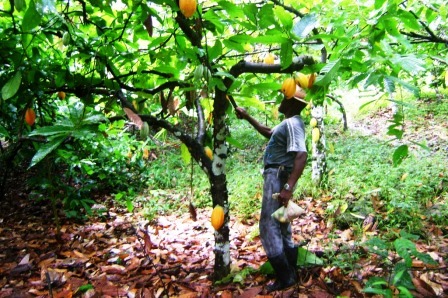
Throughout the project, six community nurseries were established - Centro de Tecnologia Alternativa (CTA), Cooperativa Mista dos Produtores Rurais da Agricultura Familiar de Comodoro (COOPERMAF), Associação Regional de Produtores Agroecológicos (ARPA), Cooperativa Agropecuária de Jauru (COOPERJAURU), and the Indigenous communities Aldeia Acorizal and Fazendinha -  to support the consolidation of 250 hectares of agroforestry systems (SAFs) across 250 rural properties.

In the beekeeping component, 500 beehives were installed for 100 families. The project also carried out structural renovations and acquired equipment to establish five minimum‑processing units: Projeto de Assentamento (PA) Margarida Alves (supporting the Grupo das Margaridas) and PA Roseli Nunes (supporting ARPA – Associação Regional de Produtores Agroecológicos) in the municipality of Mirassol D’Oeste; COOPERJAURU; COOPERMAF; and the CTA headquarters in Pontes e Lacerda. Additionally, two honey houses were supported: one located in ACA, in the municipality of Comodoro, and the honey house of the Associação Portence de Apicultores(as) e Agricultores(as) da Agricultura Familiar de Porto Esperidião (APA), in Porto Esperidião. Vehicles were also acquired to support the distribution of production.

In terms of agroforestry product processing, the processing plant and the associated units enabled the execution of 127 commercialization contracts through institutional markets and other outlets. A total of 34 tons of fruit were produced and processed, 80% of which came from productive homegardens and SAFs supported by the project. The organizations also participated in several municipal public procurement calls for purchasing food products, including those for school feeding.

A major achievement was securing the registration of the trademark “Sabor dos Vales” with the Ministry of Agriculture, Livestock and Supply (MAPA), and the creation of product labels and acquisition of barcodes, which provided legal security and added value to 16 types of fruit pulps and honey marketed under the registered brand.

The Family Farming Agroecological and Solidarity Business Office (ENAFAS) was established as a project‑supported mechanism to coordinate commercialization activities, including itinerant markets in municipalities participating in the Food Acquisition Program (PAA) and the National School Feeding Program (PNAE). Since 2018, ENAFAS has created the “Caminhos da Agroecologia” marketing route, which strengthened the coordination of these actions and also launched online sales and delivery services via the “Kyte” application.

In the area of cross‑cutting activities, the following stand out:

• Renovation and modernization of the CTA Training Center
• Training course for Agro‑Environmental Technical Agents
• Technical training courses: nursery management for forest and fruit tree species, and course on the Rural Environmental Registry (CAR), all conducted at CTA
• Workshops on agroecological principles; preparation of natural pesticides, pastes, and plant‑based extracts; and production of animal feed
• Field days on agroecological pastes and extracts; pruning and grafting; seedling preparation and planting; and green manuring
• Seminars on commercialization, technical assistance, rural credit, PRONAF Mulher, agroecology and women, and agroecological fairs
• Exchange visit on SAF establishment and production for beneficiaries and partner technicians, with emphasis on the participation of youth and women, and involving partners such as IFMT, FASE‑MT, and UNEMAT Pontes e Lacerda
• Biannual workshops for alignment, planning, and monitoring of ATER activities
• Beekeepers’ gathering held in 2018 at CTA, with participation from the project’s area of influence

In total, the project supported the training of 99 individuals in SAFs, processing technologies, and topics related to the commercialization of agroforestry products.

Planning and monitoring activities were also carried out for Technical Assistance and Rural Extension (ATER), along with technical visits to beneficiary families to establish the project’s reference baseline, develop SAF designs, implement beehives, and provide guidance to the Indigenous communities of Fazendinha and Acorizal. A total of 275 families benefited from technical assistance for planting, management, and/or commercialization of agroforestry products.




Final Evaluation

Result and Impact indicators

The project’s activities contributed to the results related to the "Sustainable Production" (1) component of the Amazon Fund Logical Framework.

Below are the results of the main indicators agreed upon for monitoring the expected direct effects.

Direct Effect 1 – Agroforestry product value chains with increased added value (Components 2, 3, and 4)

  • Revenue from the sustainable economic activity supported by the project (processed products)
    Target: R$ 505,000 | Result achieved: R$ 1,057,708
  • Number of families benefiting from technical assistance for the processing of agroforestry products
    Target: 288 | Result achieved: 288
  • Verification of the installation and operationalization of the Commercialization Support Center
    Target: 1 | Result achieved: 4

Direct Effect 2 – Expanded technical capacity for the implementation of Agroforestry Systems (SAFs), and for the processing and commercialization of agroforestry products (Components 2 and 4)

  • Cumulative measurement of the number of individuals trained in SAFs, processing technologies, and topics related to the commercialization of agroforestry products
    Target: 30 | Result achieved: 99
  • Measurement of the number of individuals trained in the implementation of Agroforestry Systems (SAFs), processing, and commercialization of agroforestry products who are effectively using the techniques and knowledge acquired
    Target: 250 | Result achieved: 743

Direct Effect 3 – Deforested and degraded areas recovered and used for economic purposes through agroforestry systems (SAFs)

  • Measurement of the number of beehive boxes installed and producing with support from the project
    Target: 500 | Result achieved: 500
  • Measurement of the area of SAFs implemented by the project (hectares)
    Target: 250 | Result achieved: 250

Institutional and administrative aspects

The project enabled the implementation of various training workshops for beneficiary families and partner organizations, strengthening the exchange of knowledge.

The establishment of partnerships with other institutions contributed to ensuring that the knowledge developed throughout the project can be replicated in other communities that did not directly participate in the initiative.

Risks and lessons learned

When estimating the operating costs of SAF‑related activities, it is essential to consider the time between the project’s approval and its actual implementation, in order to avoid cost discrepancies resulting from price increases over time. Delays in initiating a project of this nature - especially one involving families with immediate needs - can lead to loss of trust and even withdrawal from participating in the initiative.

Sustainability of results

The production of seedlings, being an income‑generating economic activity, proved to be sustainable after the completion of the project.

Another important point was the establishment of supply contracts for the production, even in the face of disruptions caused by the COVID‑19 crisis.


Collection

In this area we offer some PDF files with the main publications generated by the project. Click the filename to start the download.