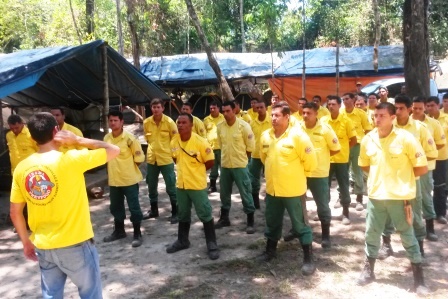
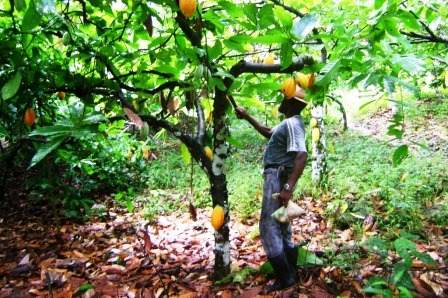
The project is structured into five components and operates in 15 priority municipalities and 17 adjacent municipalities along the BR-364 corridor, a region with a strong presence of smallholder cocoa farming. The area presents significant demand for forest cover restoration and compliance with the Brazilian Forest Code, as well as strong potential for the implementation and expansion of Agroforestry Systems (AFS).
The main activities carried out under each component are presented below.
Component 1 – Environmental Compliance
Activities under this component focused on establishing the operational foundation for environmental restoration and the implementation of agroforestry systems. Professionals were hired and vehicles, equipment, and inputs were acquired to strengthen seedling production, alongside the expansion of nursery infrastructure. Seed collection and processing activities were also carried out, resulting in the production of 625,774 seedlings in the early stages of germination and growth.
A specialized surveying, architecture, and engineering firm was contracted to develop the expansion plans for the project office and the construction design for a banana propagation laboratory, providing the technical basis required for the implementation of these support facilities.
Component 2 – Rural Extension, Capacity Building, and Strengthening of Associations
The project's Technical Assistance and Rural Extension (ATER) methodology was established based on training in Technical and Managerial Assistance conducted in partnership with the National Rural Learning Service (SENAR-RO). This process defined the service delivery stages for beneficiary families and established eligibility criteria for participation. Specialized technical service providers were also contracted to implement rural extension and technical assistance activities.
Associations, cooperatives, and local institutions were mobilized to identify opportunities and challenges related to access to institutional markets, bringing together producer organizations, government agencies, and institutions that support family farming.
Activities also included surveys and assessments with associations and cooperatives, identifying challenges related to administrative and financial management, project preparation for fundraising, member participation in collective activities, and youth engagement in rural areas. These assessments will guide future training activities for project participants.
In addition, the methodological and pedagogical framework for the Rural Education Program was initiated through a participatory process, focusing on training family farmers in agroforestry systems, association building, cooperativism, and farm management.
Component 3 – Business Development
Economic feasibility studies of the açaí value chain are being developed to support market expansion for agroforestry products. Work also began on the development of a traceability system for value chains associated with agroforestry systems, aligned with the requirements of the European Union Regulation on deforestation-free products (EUDR).
Within this context, the development of the Traceability Protocol for Cocoa, Açaí, and Banana Supply Chains in the state of Rondônia was initiated.
Component 4 – Monitoring, Analysis, and Landscape Management
Development of the first annual deforestation monitoring report for the state of Rondônia was initiated to support the monitoring of land-use dynamics and their impacts within the project's area of operation.
Communication and outreach activities were carried out to expand awareness of the project among family farmers, using a combination of printed materials, digital communication channels, television and radio broadcasts, and launch events held in key municipalities within the project area. These events involved public institutions, cooperatives, producer associations, and family farmers.
As part of the mobilization process for establishing Associative Hubs, meetings were held with associations and cooperatives, and WhatsApp groups were created to disseminate official information and guide farmers on how to access project activities and services.
The project's institutional website was launched, enhancing the dissemination of project activities and results.
Component 5 – Project Management
To ensure implementation of the planned activities, financial and administrative teams were hired, and administrative, operational, and logistical expenses were covered, including the acquisition of a vehicle to support field activities.